Back to articles
How to Write Rap Lines That Actually Stand Out

So, you want to learn how to write rap lines? It all starts with one simple idea: find something real to say. The best bars aren't about complex rhymes; they're about sharing your unique perspective and experiences. Get that right, and the flow and wordplay will naturally fall into place.
Finding Your Authentic Voice in Rap
Before you even think about rhyme schemes or punchlines, you have to figure out what you want to say. Great rap hits hard because it feels real. Think about it—whether it’s Kendrick Lamar detailing life in Compton or J. Cole reflecting on his own journey, the power comes from their honesty. Your story is your most valuable tool.
Authenticity isn't about faking a life you don't have. It's about pulling the universal truths out of your own experiences. Maybe that’s the daily grind of a dead-end job, the quiet joy of a small win, or the messy parts of a relationship. These are the things that make people nod their heads and say, "I feel that."
Brainstorming Your Core Message
To find that authentic voice, just start brainstorming. Forget about writing actual lyrics for a minute—just get ideas on paper. Ask yourself a few things:
What's my unique angle? What do I notice that other people seem to miss? What's my take on the world?
What moments defined me? Think about the highest highs and the lowest lows. What did I learn? What did it feel like?
What gets me fired up? What are my passions? What makes me genuinely angry? Strong emotions are pure fuel for powerful lyrics.
The goal isn't to find the "perfect" topic. It's about finding your topic. The more personal you get at the start, the more original and compelling your bars will be.
Turning Ideas into Lyrical Themes
Once you've got a list of raw ideas, start clumping them together into bigger themes. This is how you build the foundation for an actual song, not just a bunch of disconnected lines. A truly great track tells a story or explores one powerful idea from a few different angles.
If you’re staring at a blank page and nothing’s coming, a creative assistant can be a game-changer. Lyric Studio has a feature called “Magic Draft,” which can instantly generate a first verse and chorus based on a mood and genre you pick. It's an incredible way to get the ball rolling and see how a simple theme can start to take shape.
Ready to find your voice and write lyrics that actually connect with people? Download Lyric Studio free on iOS and start figuring out what you really have to say.
Mastering Rhyme Patterns and Flow
Once you’ve locked down your core message, it’s time to get into the mechanics of what makes rap so addictive: rhyme and flow. Great rap is way more than just making the last words of each line match up. It's about building a lyrical rhythm that grabs the listener and doesn't let go.
Sure, you can start with the classic AABB couplet—it's a solid foundation. But the real magic happens when you start playing with more complex structures.
Think of your rhymes as the snare and hi-hats of your lyrics. You can hit them hard at the end of each line for that classic punch, or you can sprinkle them throughout your bars. These are called internal rhymes, and they add a whole new layer of texture to your flow. Weaving them in makes you sound more technical and keeps the listener hooked on every word.
Expanding Your Rhyme Vocabulary
Don't get stuck in the "cat" and "hat" trap of perfect rhymes. The greatest MCs lean heavily on slant rhymes (or near rhymes). These are words that sound similar but aren't an exact match, like "shape" and "great." This simple trick blows the doors wide open on your word choice, letting you say what you actually mean without sounding cheesy or predictable.
A dense, multi-syllable rhyme scheme can showcase technical skill, while a simpler, more spaced-out pattern can give your storytelling room to breathe. The key is to match your rhyme style to the mood and message of your song.
When you hit a wall and just can't find that perfect word, the integrated rhyme and thesaurus tools inside Lyric Studio are a lifesaver. The AI-driven suggestions are context-aware, so you can discover creative options that refine your word choice without losing your rhythm. If you want to really get into the nitty-gritty, check out our guide on how to make rhymes faster.
Visualizing Your Flow and Structure
Sometimes, seeing your rhyme scheme on the page can help you feel the rhythm before you even spit a single word. This visual breakdown gives you a simple way to map out how different patterns connect words in a verse.
Planning your structure like this helps make sure your flow feels deliberate and powerful. It's not just about what you say, but how you say it.
Interestingly, the complexity and density of rhymes in hip-hop have evolved dramatically over the years, with distinct trends emerging from different regions. This has been a hot topic in linguistic analysis of the genre.
Rhyme Density by Region
This table shows a simplified look at how rhyme density—the frequency of rhyming words within a bar—has increased in different U.S. hip-hop scenes.
Region | Rhyme Density Increase |
|---|---|
East Coast | 35% |
West Coast | 28% |
The South | 42% |
Midwest | 31% |
What this shows is a clear trend towards more intricate lyrical structures across the board, with some regions pushing the envelope more than others.
Ultimately, getting good at this is all about practice. Listen to your favorite rappers, break down their rhyme schemes, and then try to build your own.
Ready to take your flow to the next level? Download Lyric Studio free on iOS and see how its suggestions can help you craft more complex and compelling bars.
Using Real-World Details to Hook Listeners

What separates a throwaway line from a classic bar? More often than not, it’s the details. Anyone can write a vague lyric about making money or dealing with haters. But a line that mentions a specific street corner, a beat-up pair of sneakers, or a vivid memory? That’s what paints a picture in the listener's head. It’s how you make your music feel real.
Instead of just saying you're "working hard," describe the glow of the laptop screen at 3 AM or the taste of that lukewarm gas station coffee you’re sipping on. These tangible, sensory details ground your story in reality, and that makes the emotion you're conveying a hundred times more powerful. It’s the classic writing advice: show, don’t tell. For a rapper, it’s one of the sharpest tools in the shed.
Grounding Your Bars in Reality
Think about your favorite rappers for a second. I guarantee their most memorable lines are loaded with specific references that pull you right into their world.
You'll probably notice they use things like:
Places: Shouting out a specific city, neighborhood, or even a local spot makes your story feel like it actually happened somewhere.
Brands: Dropping the name of a luxury watch or a specific brand of liquor can instantly set a scene and communicate a vibe.
Moments: Referencing a shared cultural event or a personal memory creates an immediate, almost subconscious connection with your audience. They feel like they were there.
This is a killer technique for bridging that gap between rapping about your ambitions and still being relatable. You can talk about the high life, but grounding it with everyday symbols keeps your listeners locked in.
"A line about wearing ‘nice clothes’ is forgettable. A line about a scuff mark on your favorite pair of Jordans tells a whole story. Specificity creates emotion and makes your lyrics stick."
Finding Details in Your Own Life
So where do you find these details? Your own life. You don't need some crazy backstory to write compelling rap; you just need to start paying attention to the little things around you.
The texture of a worn-out bus seat, the sound of rain hitting the windowpane, the exact words someone used in an argument—these are the raw materials for authentic storytelling.
Seriously, keep a small notebook or just use the notes app on your phone. Jot down interesting things you see, conversations you overhear, or feelings you can’t shake. When you sit down to write, you'll have a goldmine of real-world inspiration to pull from. That’s how you make sure your lyrics sound like you. This is a core part of learning how to write a rap song that truly connects.
If you ever get stuck trying to find the perfect words to capture a scene or a feeling, Lyric Studio can be a huge help. Its suggestions are context-aware, so it can give you detailed phrases that fit the mood you’re building, adding that extra layer of realism that makes a good bar great.
Balancing Simplicity with Creative Wordplay
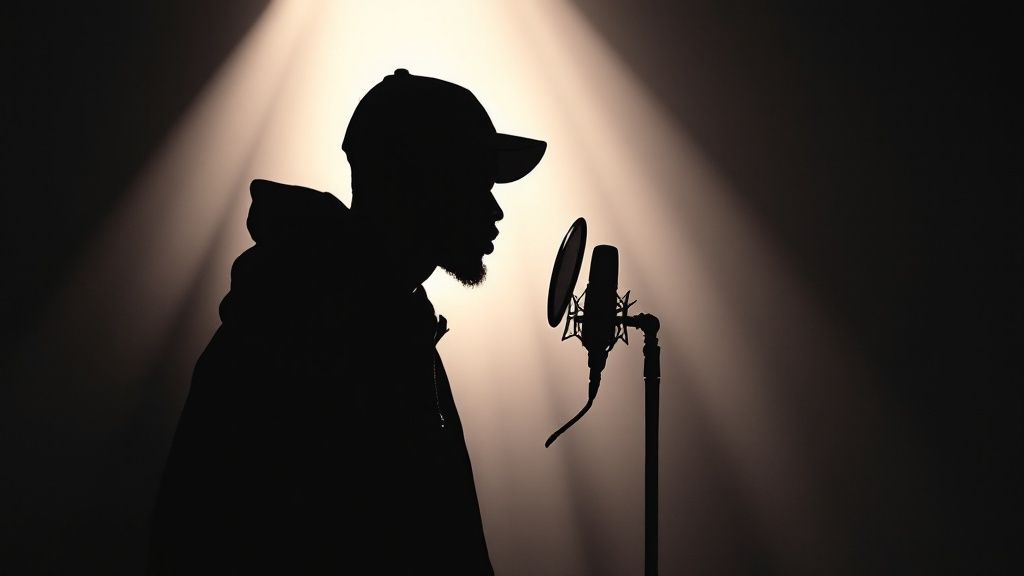
It’s a common trap to think that the best rappers are the ones who cram the most complex, multi-syllable rhymes into a bar. While technical skill is definitely respectable, many of the most legendary lines in hip-hop are actually incredibly simple. The real magic happens when you learn how to say a lot with just a little.
Great writing isn’t about flexing the biggest vocabulary; it’s about choosing the right words. A direct, honest line can connect with a listener way more powerfully than a dense verse they have to struggle to understand. Keeping it simple makes your message hit hard and stick around.
This isn't just a hunch, either. If you look at the data, you'll see a clear trend. Recent studies show that modern rap lyrics are leaning more into simple language and repetition, which helps songs catch on with streaming audiences. You can dig deeper into the findings on why lyrical simplicity is on the rise in modern music.
Making Every Word Count
When you're working with fewer words, each one has to do some heavy lifting. This is where your creativity and wordplay really get to shine. Instead of just laying out an idea plainly, you can use literary devices to give it more flavor and impact.
Try weaving in elements like:
Metaphors: These create powerful images by comparing two different things directly. Think of a line like, "Life's a marathon, not a sprint."
Similes: Using "like" or "as" helps your audience instantly picture what you're describing.
Double Entendres: This is the art of using a word or phrase with two meanings, which adds a clever, witty layer to your lyrics.
These tools let you keep your language straightforward while still proving you've got skills. It’s about being smart, not just complicated.
A simple line with a clever twist will almost always be more memorable than a complex one. You want your listener to think, "Damn, I wish I'd thought of that," not, "Wait, what did he just say?"
If you ever find yourself stuck trying to nail that perfect, simple-but-strong phrase, Lyric Studio can be a great creative partner. Its AI suggestions are smart enough to get the context of your song, helping you turn a tangled idea into a clean, hard-hitting bar.
The Power of the Punchline
In rap, the punchline is the masterclass in blending simplicity with creativity. It’s that one line, often at the end of a couplet, that delivers an unexpected and witty twist. A truly great punchline feels like a surprise, but in hindsight, it feels like it was the only way the line could have ended.
The setup is simple, but the payoff is genius. That's the balance you want to strike in your own writing. Use clear language to paint the picture, then hit them with a creative turn that they'll be thinking about long after the track is over.
Ready to start writing lines that are both simple and smart? Download Lyric Studio free on iOS and see how it can help you sharpen your wordplay.
Polishing Your Lines Until They Shine
Your first draft isn't the finished product. Think of it as a block of marble—the shape is there, but the real art comes from chipping away until you’ve got a masterpiece. This is where good ideas become unforgettable bars. The magic is all in the revision.
This isn't about second-guessing yourself into a corner. It’s about being objective, and the best way to do that is to rap your lines out loud. I can’t stress this enough; it’s a non-negotiable step.
You’ll immediately catch the awkward spots. You'll hear where the rhythm stumbles, which words are a mouthful, and where the energy just dies. If a line trips you up, it’s a red flag. Rework it until it rolls off the tongue.
Finding and Fixing the Weak Spots
As you’re rapping the verse, listen for the words that don't hit hard. A weak verb or a generic adjective can completely kill the momentum of a great line. Be ruthless and swap them out for something with more punch.
Sometimes the best editing tool is just walking away. Give it a few hours, or even a full day. When you come back with fresh eyes and ears, the flaws you couldn't see before will stick out like a sore thumb.
That little bit of distance gives you perspective. You'll see what’s actually working and what's just filler, making it much easier to cut what isn't serving the song.
When you’re stuck trying to find that perfect word but don't want to lose your creative momentum, a tool like Lyric Studio can be a game-changer. Its built-in rhyme suggestions and thesaurus give you ideas that actually fit the context of your line. It helps you strengthen your bars on the fly, turning what could be a frustrating process into a moment of discovery.
Ready to take your draft from good to great? You can download Lyric Studio free on iOS and start turning those rough ideas into polished bars. Just a heads-up, in-app purchases may apply.
Using Lyric Studio to Spark New Ideas
Look, every single writer hits a wall. Even the greats. It’s that frustrating moment when the perfect rhyme is on the tip of your tongue but won't come out, or the next line just feels impossible. This is where having a creative assistant in your corner can completely flip the script, turning that wall into a doorway.
Instead of battling a blank page, you can get a serious head start. Think of Lyric Studio as a collaborator. It’s designed to help you bust through writer’s block with AI-driven suggestions that are actually relevant to your song's theme and vibe. It’s not here to replace your creativity—it's here to give it a launchpad.
Jump-Starting Your Songwriting
Let's be honest, the hardest part of writing is often just starting. You've got a concept, maybe a mood, but no words. This is where the Lyric Studio “Magic Draft” feature comes in clutch. With a single tap, it can generate an entire first verse and chorus based on the genre and emotion you've picked.
Suddenly, you have something to work with, something to react to. You might keep a few lines, rewrite others, or get an idea that takes you in a totally new direction. It’s an incredible way to bypass that initial paralysis and get straight to the fun part: making the song yours.
The goal of a tool like Lyric Studio isn't to write the song for you. It's to give you a starting point so strong that you can't help but feel inspired to make it your own.
Refining and Perfecting Your Word Choice
Once you have a draft down, the real craft begins. This is where you polish every line until it shines. Finding that one perfect word—the one that nails the rhyme, the rhythm, and the meaning—is a huge part of what makes a rap verse great. Lyric Studio builds rhyme and thesaurus suggestions right into the editor, feeding you context-aware ideas as you type. It keeps you in the zone.
This is a game-changer when you feel stuck in a rut, using the same old rhyme patterns. Breaking out of that is a big step, and having fresh ideas on tap is an amazing way to learn how to overcome the rhymer's block. The suggestions actually adapt to your song, so they don't feel random.
Ready to see what you can cook up with a creative partner in your pocket? Download Lyric Studio free on iOS and start turning those scattered ideas into finished tracks. Just a heads-up, in-app purchases may apply.
Common Questions About Writing Rap Lines
As you get deeper into writing rap, you're bound to hit a few common roadblocks and questions. Everyone does. Let's walk through some of the things that aspiring artists ask the most, so you can push past them and keep writing with confidence.
How Do I Find My Own Flow?
Finding your own unique flow is all about experimentation. Seriously, just play around with it.
At first, don't be shy about trying to rap like your favorite artists. It's not about copying them forever; it's about learning what makes their rhythm and cadence work so well. Get a beat, hit record on your phone, and just go for it. Listen back to yourself.
You'll start to notice where you naturally pause, which words you hit harder, and how your voice rides the beat. Your flow is hiding in that sweet spot where your own speaking patterns meet the music. It’s a feeling you discover, not a formula you memorize.
Here's a pro tip: Mutter your lines under your breath while you write. Your mouth will physically feel a clunky or awkward cadence before your ears even pick it up.
Is It Okay to Use AI Songwriting Tools?
Absolutely. Think of modern tools as a creative assistant, not a replacement for your own voice. An app like Lyric Studio can be an incredible collaborator, especially when you feel stuck.
Instead of staring at a blank page, its AI can give you context-aware rhyme suggestions and phrase ideas to get the ball rolling again.
The Magic Draft feature, for instance, is perfect for kicking things off. It can spit out a rough first verse and chorus, giving you a starting block to edit, rewrite, and make entirely your own. If you're looking for more techniques and different takes on the writing process, check out theclipbot blog for more rap writing insights.
At the end of the day, the right tool is anything that helps you get your own ideas out more clearly.
Ready to break through writer's block and get your lyrics polished? Let Lyric Studio be your creative partner.
Download Lyric Studio free on iOS.
Note: In-app purchases may apply.

SCAN TO GET