Back to articles
How Do You Make a Rap Song from Scratch?
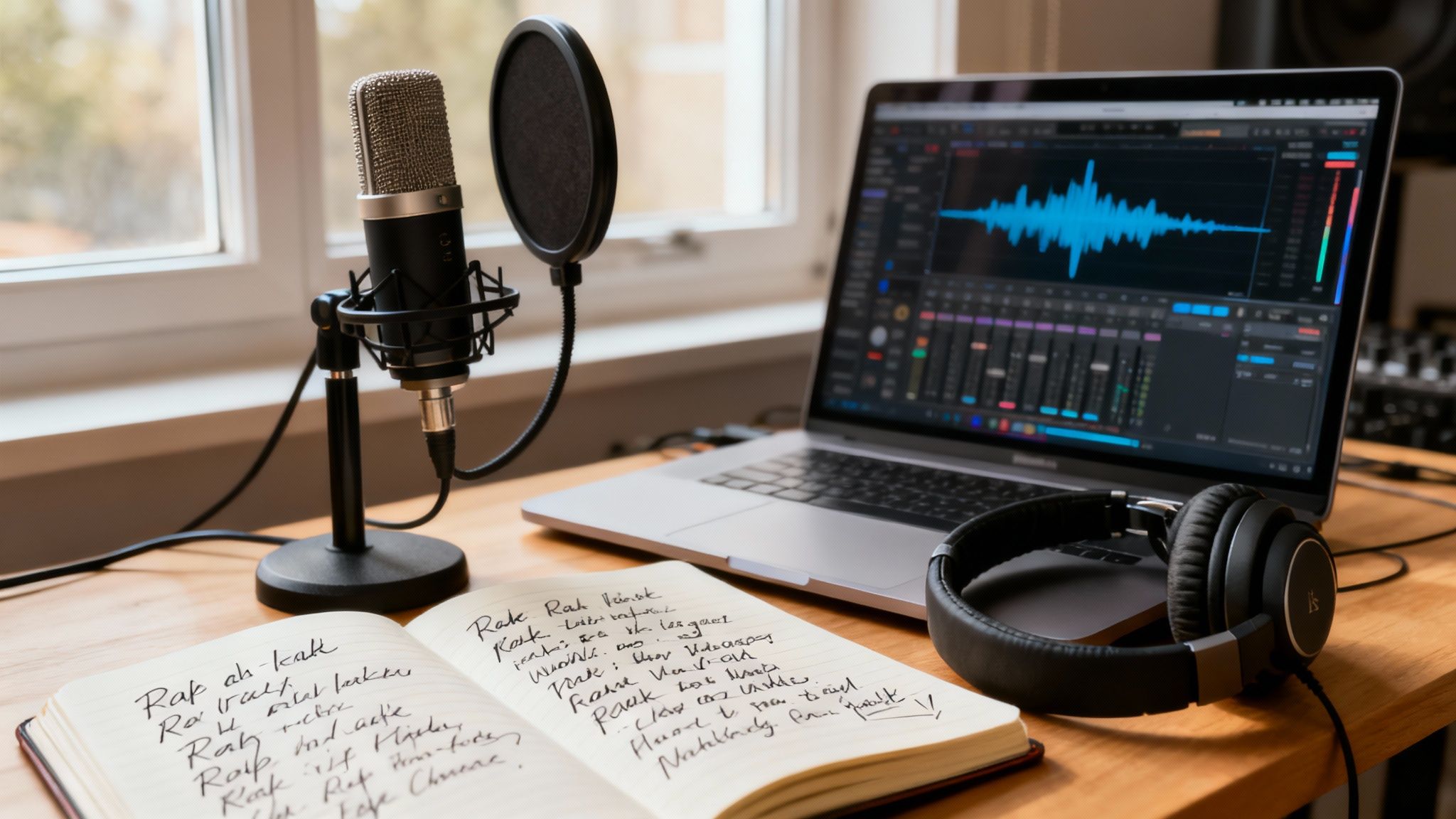
Every great rap song starts with three things: an idea, a beat, and that first line. It's a simple formula, but the magic is in how you put them together. You start with something you need to say, find the right instrumental to give it a pulse, and then start weaving your words into a rhythm that hits.
From a Blank Page to Your First Verse
Let's be real—the hardest part is just starting. That blinking cursor on a blank screen can feel like a spotlight. But every legendary track you've ever heard began exactly the same way. The key is to break it down.
First, what's on your mind? What story are you dying to tell? It doesn’t have to be some epic life story. It could be about your neighborhood, a feeling you can't shake, or just pure, unfiltered confidence. Latch onto that one core idea.
With that theme in your head, it's time to find the beat. This isn't just background noise; the instrumental is the entire mood and backbone of your song. Spend time listening. Does your story need a slow, thoughtful beat, or does it demand a high-energy trap banger to come to life? The right beat will make the words flow almost by themselves.
This is the point where a lot of artists get stuck. The dreaded writer's block. To keep the momentum going, it's smart to adopt some habits that help you improve your writing speed and get those ideas out of your head and onto the page before you lose them.
This graphic breaks down that initial creative spark perfectly.
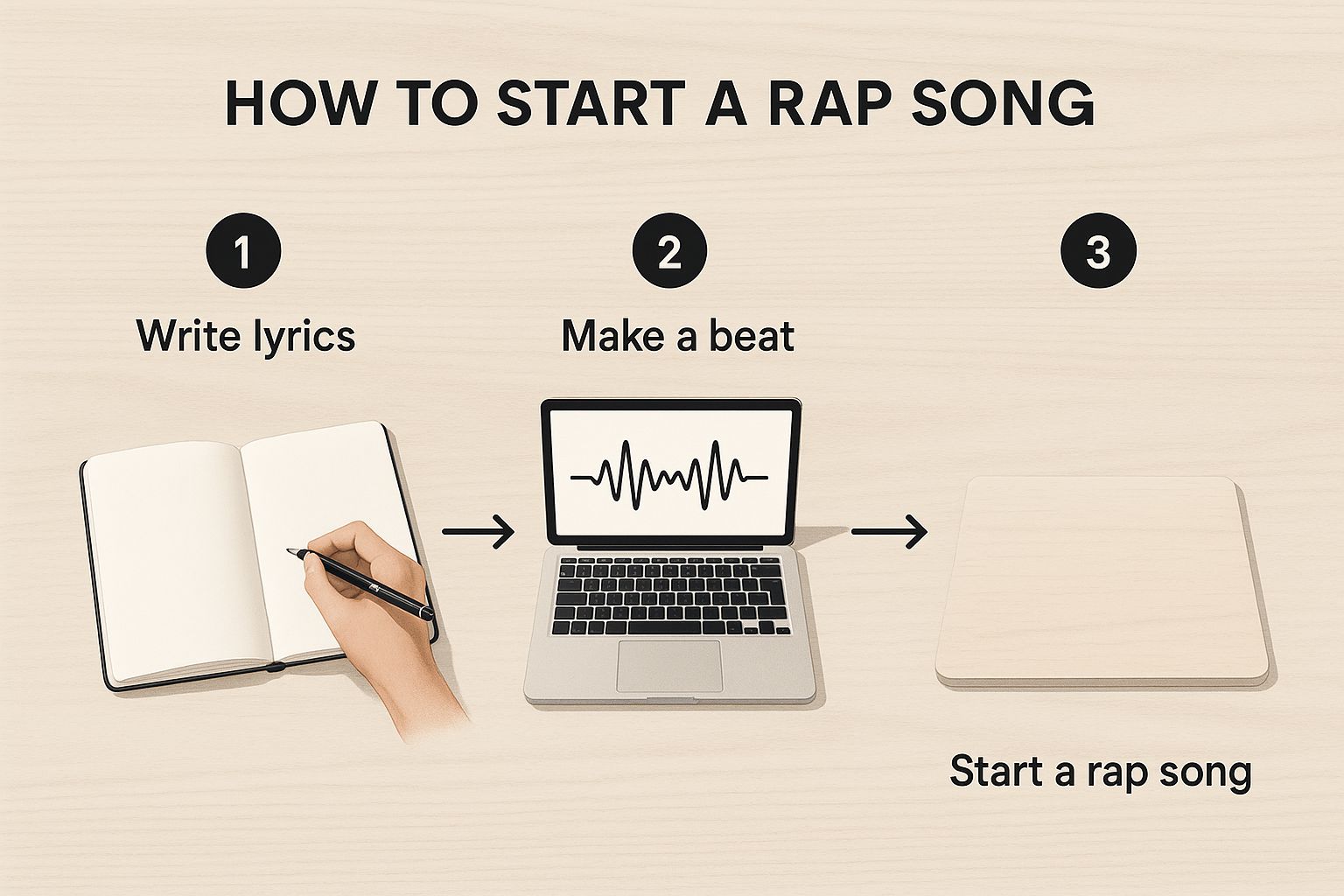
It’s all about taking that initial concept, matching it with the right vibe from an instrumental, and using that combination as the launchpad for your first bars.
Key Takeaway: Don't chase perfection right out of the gate. Just get something down. A messy first draft is infinitely better than a perfect, empty page.
Your Rap Song Quick-Start Checklist
If you're feeling stuck, just focus on nailing these three things first. They provide the foundation you need to build the rest of your track.
Element | Your First Goal |
|---|---|
The Idea | Settle on a single theme or story. What's the one thing you really want to say? |
The Beat | Find an instrumental that matches the emotion of your idea. Don't overthink it. |
The Lyrics | Write just one or two lines that capture the core message. That's your starting point. |
Getting these essentials locked in will give you the momentum to push through and build out your song.
If you want to skip that initial friction altogether, Lyric Studio can be a massive help. The “Magic Draft” feature, for instance, can instantly generate a first verse-and-chorus based on your topic. It’s not about replacing your creativity, but about turning that intimidating blank page into a collaborative starting point.
For a deeper dive into structuring your lyrics from the ground up, check out these 5 steps to easily write song lyrics.
Crafting Lyrics That Actually Connect
Alright, you've got your beat. It sets the vibe, but your lyrics? That's where you tell your story. Good rap isn’t just about stringing together words that rhyme; it’s about making every single syllable land with purpose. This is the difference between just talking over a beat and really hitting your listeners where it counts.
The most powerful tool you have is your own voice. Seriously. Don't try to sound like your favorite artist—your unique perspective is what's going to make people listen. Dig into your own experiences. Get specific. Use vivid details to paint a picture so clear they can see it. A killer metaphor can turn an average line into one they'll never forget.
Building Your Lyrical Structure
The skeleton of your flow is your rhyme scheme. It’s the pattern that gives your verses their rhythm and makes them sound good to the ear. You don’t need to get crazy complex right away. Nailing the fundamentals is how you build a solid foundation.
AABB Scheme: This one’s simple and direct. The first line rhymes with the second, and the third rhymes with the fourth. It's perfect for creating a punchy, memorable feel that sticks in your head.
ABAB Scheme: Here, the first line rhymes with the third, and the second with the fourth. This pattern feels a bit more like a conversation and can give your flow a more intricate vibe.
Getting a handle on these patterns is a huge first step. For a deeper dive, you can learn more about how to use a rhyme scheme to improve your songwriting.
A quick tip: Let the story guide the rhyme, not the other way around. Never force a rhyme if it kills the meaning of your line.
This is exactly where Lyric Studio shines. When you’re stuck trying to finish a line, its integrated rhyme and thesaurus tools don't just spit out random words. They give you AI-driven, context-aware lyric suggestions that actually make sense with what you're trying to say. This creative assistant helps you find that perfect word that both rhymes and matches the emotion of your track.
Ready to see how it works? Download Lyric Studio free on iOS.
Discovering Your Unique Flow and Delivery
Your lyrics tell the story, but your flow is what makes people feel it. Think of it as your signature—the unique rhythm and cadence you bring to the track. It’s all about your speed, your pauses, how you emphasize certain words, and even your breath control. Honestly, it's the one thing that will truly separate your sound from every other artist out there.
The beat is your playground. Your flow is how you navigate it. Are you going to ride ahead of the beat, hang back behind it, or hit every single snare with surgical precision? There's no right or wrong way. Finding a killer flow is all about messing around and discovering what feels most natural to you and your style.
Finding Your Cadence
One of the best ways to get better is to just rap along to your favorite artists' tracks. But don't just mimic them. Really listen to how they're delivering their lines. Pay attention to their patterns, notice where they take breaths, and feel how their energy shifts from the verse to the hook.
Another great exercise? Record yourself. I know, it can feel a little weird at first, but listening back is the fastest way to catch awkward phrasing or spots where your energy dips. You're aiming for a delivery that sounds confident and, most importantly, authentic. A huge part of this is learning how to write lyrics to a beat in a way that truly serves your natural rhythm.
Key Takeaway: Flow isn't just about rapping fast. It's about rhythm, personality, and control. A slow, deliberate flow can hit just as hard as a rapid-fire one if the delivery has conviction.
This is where playing with suggestions from Lyric Studio can unlock some new ideas. You can use its genre and mood customization for hip-hop, pop, R&B, and more to get lyric ideas built for totally different styles.
This isn't about letting an app write for you; it's about using it to experiment with cadences you might not have thought of otherwise. Think of it as a creative partner nudging you to find a flow that perfectly matches the vibe of your beat and your message.
Ready to find your signature sound? Download Lyric Studio free on iOS. Just a heads up, in-app purchases may apply.
Structuring Your Song for Maximum Impact
A killer rap song is more than just a collection of hot bars; it takes the listener on a journey. The way you arrange those bars—your song structure—is the map for that journey. Without a clear path, even your best lines can get lost and fail to hit with the power they deserve. It's the secret sauce that keeps people hooked from the first beat to the final fade-out.
You've probably noticed that most rap songs follow a familiar pattern. There's a reason the classic Verse-Chorus-Verse-Chorus structure is so common: it just works. It's memorable, provides a solid backbone for your story, and gives listeners something to latch onto. Each part has a specific job to do, and when they work together, you get a complete and satisfying track.
The Building Blocks of a Rap Song
So, let's break down the essential pieces. Think of these as the fundamental tools in your arrangement toolkit. Getting a handle on what each one does is the key to making a track that flows.
The Verse: This is your storytelling space. Each verse should push the narrative forward, adding new details, a different angle, or more emotional weight. It's where you get specific and paint a picture with your words.
The Chorus: This is your hook. It's the central idea of your song, boiled down into something catchy and repeatable. The chorus is the part that gets stuck in people's heads.
The Bridge: While not every song has one, a well-placed bridge can be a total game-changer. It switches up the vibe—maybe a different melody, a slower rhythm, or a new perspective—before bringing it back home. This break in the pattern makes the final chorus hit even harder.
Your song's structure is the invisible hand guiding the listener. A strong verse builds tension, a powerful chorus delivers the payoff, and a slick bridge keeps them from knowing what's coming next.
Tying everything together with a consistent theme is what separates a decent track from a great one. This is where a creative assistant like Lyric Studio can really shine. Its AI looks at what you've already written—whether it's your first verse or your chorus—and gives you suggestions that actually fit.
It helps you make sure your second verse connects to the first, or that your bridge makes sense within the story you're telling. It’s like having a co-writer who keeps you on track, ensuring you end up with a cohesive, polished song.
Ready to build a track that flows perfectly from start to finish? Download Lyric Studio free on iOS.
Recording and Polishing Your First Track
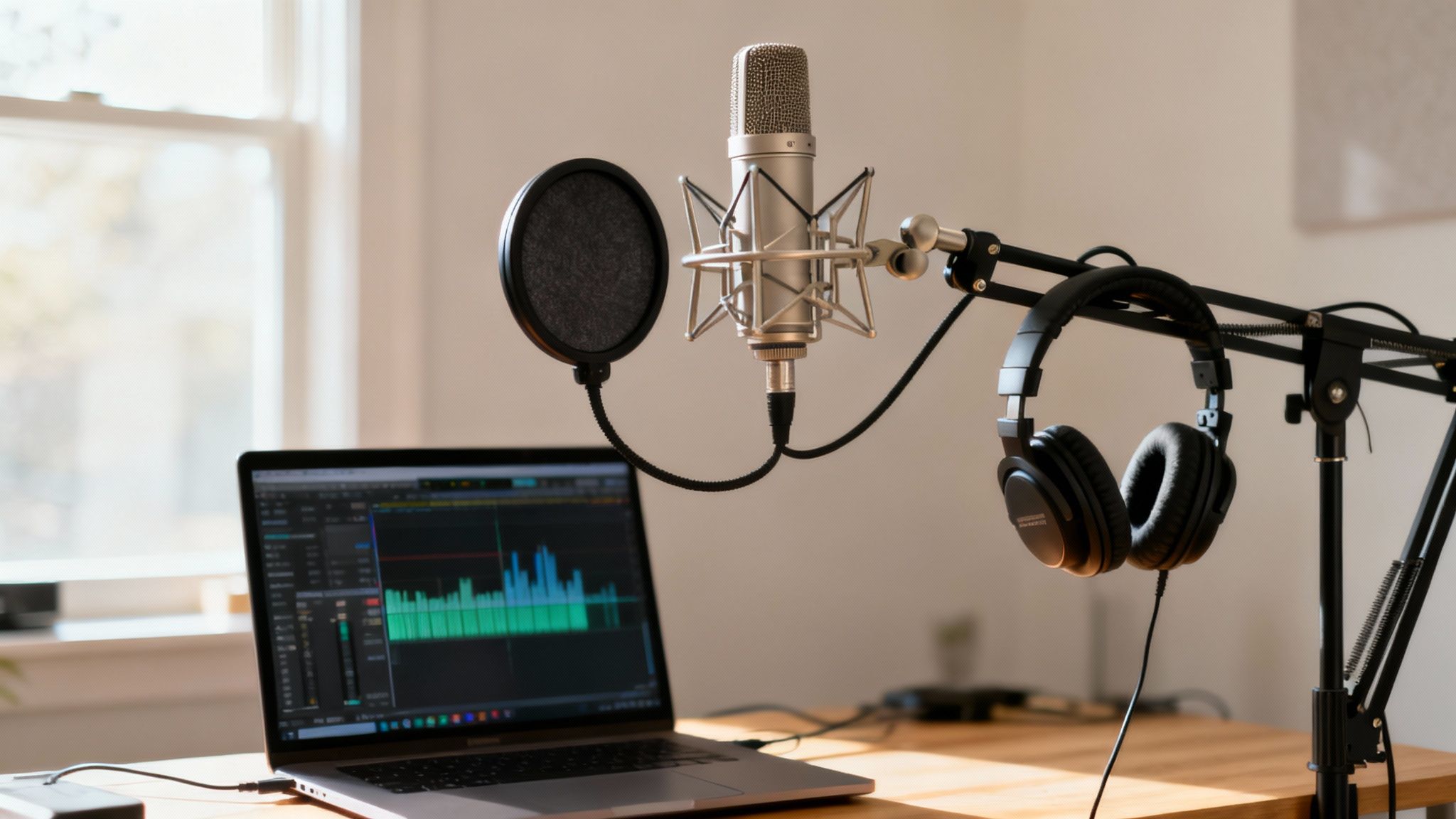
Alright, you've got your lyrics, you've got your beat—now it's time for the magic. This is where your words and flow finally meet the music, turning all that hard work into a real song. It’s the most exciting part of the process.
You don't need access to a multi-million dollar studio, either. These days, a solid home setup can get you surprisingly professional results. The key is capturing a clean, confident vocal performance. That means finding a quiet spot, really projecting, and delivering your lines with the energy you want your audience to feel.
If you're just starting to build your own space, figuring out the essential voice-over recording equipment can save you a ton of cash and headaches.
Come Prepared, Leave with a Banger
Walking into a recording session—even if it's just in your bedroom—fully prepared is a game-changer. Nothing kills the vibe faster than fumbling with lyrics or realizing a verse doesn't quite work. This is where all your prep pays off.
Think of an app like Lyric Studio as your pre-production secret weapon. It helps you get to the mic with your verses already tight and your chorus hitting hard. With all the AI-driven suggestions and rhyme tools, you've already fine-tuned every bar before you even think about pressing record.
When you're not second-guessing your words, you can pour all your focus into the performance itself. And trust me, that confidence comes through loud and clear on the final track.
Key Takeaway: A great recording starts long before you hit the booth. Strong, polished lyrics are the foundation for a track that sounds legit.
Once your vocals are recorded, the last step is a little post-production polish. We're not talking about anything crazy here, mostly just mixing. It’s all about balancing the volume levels of your voice and the beat so they sit together perfectly. You want your vocals to cut through the track without drowning out the instrumental.
Ready to walk into your next session with lyrics that are already fire? Download Lyric Studio free on iOS. Note that in-app purchases may apply.
Got Questions About Making Rap?
It's only natural to have questions when you're figuring out how to make a rap song. Every artist hits a few roadblocks along the way. Let's tackle some of the most common hurdles you might face and give you some real-world advice to keep you on track.
"I've Run Out of Things to Rap About."
We've all been there, staring at a blank page. The biggest mistake is thinking you need some massive, profound topic to write about. The truth is, authenticity is what really connects with an audience.
Start small. Write about your day, your frustrations, your wins, or even just something you observed on the bus. Your own life is a goldmine of material.
If you’re truly stuck, a creative assistant can be a great sparring partner. In Lyric Studio, the “Magic Draft” feature can spin up a whole first verse and chorus from just a simple theme. It’s an awesome way to get the engine started when you feel like you're out of gas.
"How Do I Actually Get Better at Rhyming?"
Practice, practice, practice. But it's not just about writing more; it's about listening with a purpose.
Don't just vibe to your favorite rappers—dissect their work. Pay attention to how they use internal rhymes (rhymes within the same line) and multi-syllable rhymes. It's way more complex than just finding words that rhyme at the end of a bar. Training your ear this way will seriously expand your own rhyme vocabulary.
To speed things up, a dedicated tool can make a huge difference. Lyric Studio’s integrated rhyme finder is smart; it suggests rhymes that actually fit the context of your song. You'll find more interesting and meaningful connections than you ever would with a basic rhyming dictionary.
Pro Tip: Don't get trapped by perfect rhymes. Near rhymes, also called slant rhymes, often sound more natural and conversational. They give you way more freedom to tell your story without sounding forced.
"Do I Need a Bunch of Expensive Gear to Start?"
Nope. Not at all. You can literally start making music right now with the phone in your pocket and a pair of earbuds. Honestly, a killer idea and sharp lyrics are way more valuable than fancy equipment. Focus on getting your writing and flow down first.
Once you have a song you’re proud of, the best first upgrade is a solid, affordable USB microphone. That alone will make a huge difference in your recording quality. But always remember: the song comes first, the gear comes second.
"How Long is a Rap Song Supposed to Be?"
If you look at what's popular on streaming services, most rap tracks land somewhere between 2.5 and 4 minutes. The classic structure is usually two or three 16-bar verses separated by a repeating 8-bar chorus.
But that’s just a guideline, not a rule. The real goal is to tell your story in the most effective way possible. If you can say everything you need to say in two minutes flat, do it. Never add fluff just to stretch a song out. Let the energy of the track and the message you're delivering decide its length.
Ready to tackle these challenges with a creative partner by your side? Lyric Studio gives you AI-driven lyric suggestions, genre and mood customization, and integrated rhyme tools to help you create your best work. Download Lyric Studio free on iOS.

SCAN TO GET